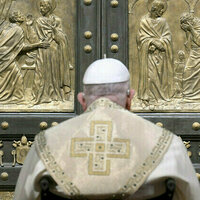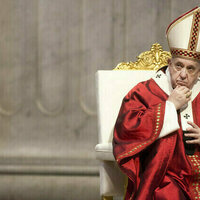


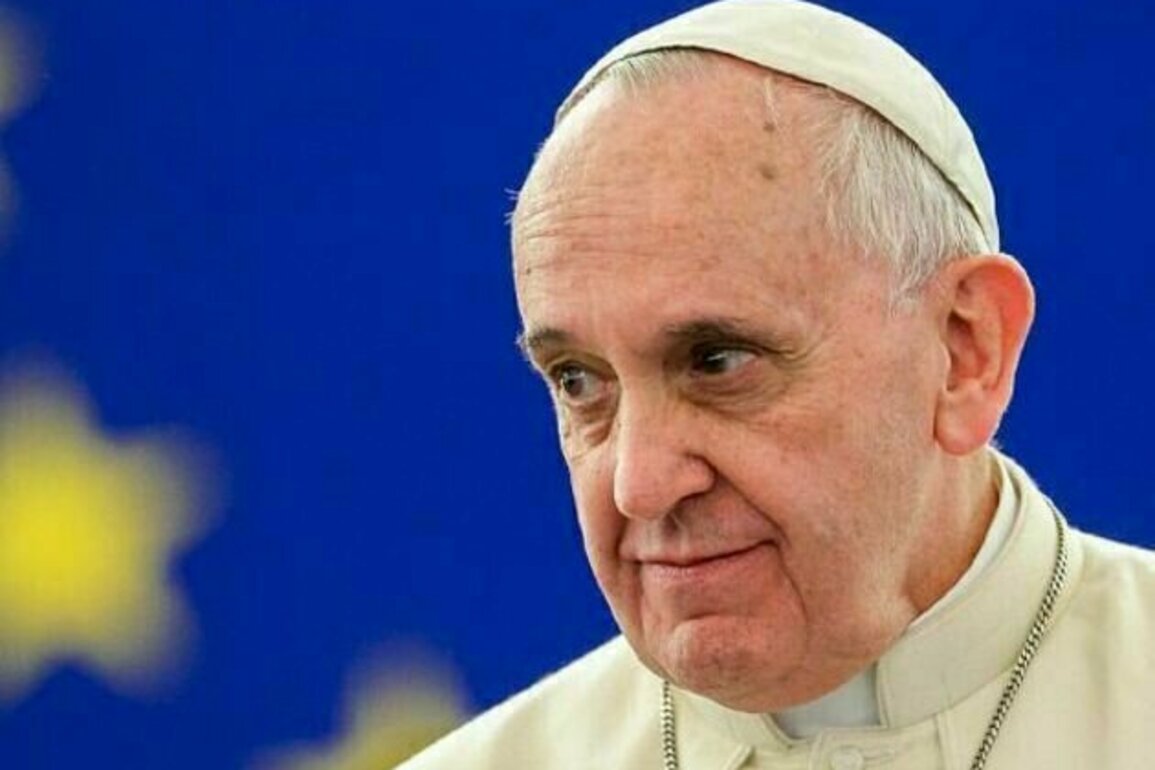
Despite his reputation as a progressive pope and a hero of the oppressed, Pope Francis' involvement in Argentina's Dirty War haunted him, writes DrBinoy Kampmark.
THE VERY IDEA of infallibility sets one up for the mighty fall. But the Pope, temporal head of all Catholics, is one such character, the papacy one such institution, arrogantly paraded before religion, faith and principle, as an individual and office hovering between humankind and God.
Unfortunately for the papal record, infallibility in any spiritual sense is no guard against spotty records and stains. It certainly does not erase what came before, though good efforts are often made to reinvent it.
PopeFrancis I, eulogised as the pontiff of the periphery and the oppressed, was not averse in his pre-papal iteration to courting the powerful and the authoritarian when a U.S.-backed military dictatorship seized power in his native Argentina in 1976. That dictatorship, responsible for the forced disappearance of 30,000 people, came to be known as the Proceso de Reorganizacin Nacional (National Reorganisation Process).
In 1978, on a visit to Buenos Aires to attend the football World Cup as dictatorJorge Videlas guest, former U.S. National Security Adviser and Secretary of StateHenry Kissingerwasfilled with praisefor the murderous methods of the Proceso in its efforts to combat terrorism.
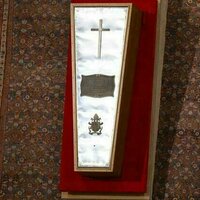
Vale Pope Francis, the man who brought us hopeThe death of Pope Francis early on Easter Monday left those of us who value freedom, peace, courage and universal love very saddened.
On their seizure of power, the junta were also keen to grease palms and cultivate ties with the Catholic Church. ArchbishopAdolfo Tortoloobligated,urgingArgentinians to cooperate in a positive way with the new government. Argentinas bishops alsoissued a statementdeclaring that the security services could hardly act with the chemical purity expected of them in times of peace.
Some freedom had to be shorn. Church figures who did not play along, such asEnrique Angelelli, the bishop of the Andean diocese of La Rioja, were murdered. In a 2012 interview, Videlaexpressed satisfactionwith church-state relations during his rule.
Videla said:
To say, for one thing, that Francis had that progressive rainbow in soul and practice is to ignore the same figure who encouraged Jesuit priests under his charge to focus on religion rather than matters of social deprivation. As Jose Mario Bergoglio, Provincial of the Jesuits, he removed teachers of the more progressive stripe and replaced them with steelier, austere types. He shunned the liberation theologians, clinging on to the 1969 Declaration of San Miguel that gave the cold shoulder to Marxism in favour of a rather vague theology of the masses.
Paul Vallelywritesthat the late Francis seemed unaware of any of the teachings of Vatican II. It was all St Thomas Aquinas and the old Church Fathers. We didnt study a single book by Gutirrez, Boff or Paulo Freire. (Those three figures were very much front and centre of liberation theology.)
The disavowal of priestly work in the slums of Buenos Aires as Provincial of the Jesuits had its consequences.Orlando Yorio, a Jesuit priest doing just such work, was conveyed in 1976 to the dark offices of the military junta by then Father Jorge Mario Bergoglios seeming refusal to back, endorse or acknowledge the labours that the military regime despised.
The same fate befellFranz Jalics. In the first trial of the junta leadership in 1985, Yorio wasconvincedthat he himself [Bergoglio] gave over the list with our names to the Navy. Jalics, however,statedin March 2013 that Bergoglio had never denounced either himself or Yorio. Both priests had been kidnapped for connections to a catechist who later joined the guerillas.
Pope Francis kicks open the church door to gay couples at lastThe head of the global Catholic Church has effectively approved same-sex unions.
At the time of his election in 2013, the Vatican made a point ofstatingthat, in the words of spokesman FrFederico Lombardi, there had never been any credible, concrete accusation against him.
In other instances during that most dirty of wars, Fr Bergoglio does not seem to acquit himself well. Estela de la Cuadra, who shared little in the way of enthusiasm for Cardinal Bergoglios elevation to pontiff, suggests that he knew far more about what was taking place in the 1970s than what he subsequently testified to.
In a trial in 2010, the then Cardinal was asked to attend a trial on the infamous stolen babies cases, a spectacularly unsavoury matter involving the handing over of infants from murdered mothers to military families. Unconvincingly, he claimed to only know of the practice once Argentina moved into the calmer, less murderous waters of democracy after 1983.
De la Cuadrais all rebuttal, claiming that her father had been advised by the then Fr Bergoglio to meet a bishop who might advise him on the fate of the disappearance of his pregnant daughter, Elena. The bishop was, at best, callously helpful, informing him that his granddaughter was now with a good family.
The ventures to investigate and tease out Bergoglios legacy during the Proceso remain a matter of record. Investigations by scribblers in 1986 and 2003, carried out respectively byEmilio MignoneandHoracio Verbitsky, attest to that. (Verbitskys account is further spiced byallegationsthat he was himself on the juntas payroll, working as ghost writer for BrigadierOmar Domingo Rubens Graffigna.)
Bergoglios disputed dance with the junta continues that extensive tradition perfected by the Catholic Church. A power, however ruthless in the secular realm, should still be accommodated by the spiritual leaders of the church if the adherents of said power are sympathetic followers of Rome.
Gabriel Pasquini, editor ofEl Puercoespn,blazedin 2013:
The argument for the defence has tended to be framed along the lines of internal church politics, misunderstanding and indignant claims of slander. There were Jesuits who took issue with him, for instance, forsellingthe Universidad del Salvador to the Iron Guard, a right-wing order characterised by an unflappable ascetic.
And when Bergoglio met with such bloodthirsty thugs as Videla and Emilio Massera, this was only to intercede on behalf of the detained clerics and others to seek their release. He was very critical of the dictatorship,assertsformer Argentine judge and acquaintanceAlicia Oliveira. He really meant well. It is precisely in that meaning that questions have been and should be asked. To what extent should the powerful be pleased by the supposedly spiritual?
DrBinoy Kampmarkis a Cambridge Scholar and lecturer atRMIT University. You can follow Dr Kampmark@BKampmark.
Related Articles
- Vale Pope Francis, the man who brought us hope
- Pope Francis kicks open the church door to gay couples at last
- Pope Francis supports same-sex unions, cardinals ask Is the Pope a Catholic?