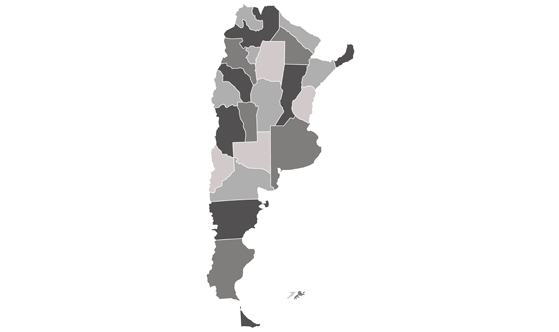



MAR DEL PLATA, Argentina (CN) - There's no definitive consensus on who invented one of the world's tastiest and seemingly Italian dishes, but one thing is certain: Its origins trace back to the Argentine coast, specifically to the city of Mar del Plata, facing the Atlantic Ocean.
Sorrentinos, a rounded ravioli-like pasta, are not only a culinary delight, but a testament to the enduring cultural ties between Italy and Argentina. These two nations have shared more than just recipes - they've shared people, traditions and stories through generations of immigration in both directions.
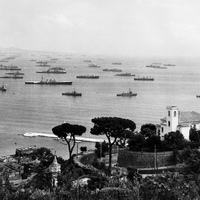
Mar del Plata, one of Argentina's most popular tourist destinations for its beaches, its huge hospitality infrastructure and its historical casino, is home to nearly 1 million residents and lies about 400 kilometers south of Buenos Aires. Since its foundation in 1874, the city has become a melting pot of cultures, but perhaps none more influential than that of Italian immigrants. In particular, many came from southern Italy and the Amalfi Coast, drawn to Mar del Plata's seaside geography, which reminded them of their homeland. These immigrants brought their language, customs and food, which over time blended with local traditions to create unique dishes like sorrentinos.
According to historians and culinary experts, sorrentinos are widely believed to have been invented in Mar del Plata in the 1950s. Two families, the Vespolis and the Persicos, claim proudly to be the creators of such a delicacy. Contrary to what is expected, both narratives coexist without conflict, at least publicly.
Pablo Barrenechea, the current manager and host of Trattoria Napolitana Vespoli in Mar del Plata, was not a part of its creation but has been a crucial part of the restaurant's life for decades. When he started dating his wife Patricia Vespoli, he would drop her at her family's house-turned-trattoria and listen with curiosity to their conversations in the Neapolitan dialect. With time, as he joined the family, he became instrumental in preserving the establishment's legacy.
"It all started out with the handmade dough, good quality cheese, and young students who showed up to eat," he said, recalling how the Vespolis worked in hospitality after emigrating from Italy in the early 1900s and served meals to their clients. Later, in 1972, came the foundation of the trattoria.
"Sorrento and Mar del Plata are twin sisters since 2007," he said. "And Italians are quite demanding for their pasta - they like it al dente, but here, they find something different."
Softer - that's the word. Sorrentinos, these round raviolis, are generally served by six with tomato sauce, and they seem very heavy on the outside, but they're soft and light once you try them. The dough, always freshly made, is delicate and airy. The Vespolis claim that Chiche Vespoli, the late father of Patricia, invented them. But the recipe, despite the years and the restaurant's popularity, hasn't changed.
"The sorrentino didn't have the dough edge of the pansotti, nor the meat filling of the agnolotti, and it didn't contain ricotta like the cappelletti. It was a full-bodied half-sphere, made with a secret dough as soft as a cloud, filled with cheese and ham," wrote Virginia Higa, author of the popular book, "Los Sorrentinos," which depicts the story of the Vespolis somewhere between fact and fiction. In the book, Higa tells the story of how the generations in the family built what is now a local emporium. But, despite its popularity, Barrenechea said they want to keep its family mystique.
"We loved the book, and it's brought a lot of customers, people who read it in book workshops and came to eat afterwards. It definitely enlightens the place's mystique," he said. Contrary to these times, where everything seems to be prone to being rapidly manufactured and replicated, the Vespolis hold on to the uniqueness of each sorrentino, made one by one, only sold in their trattoria - nowhere else - despite the several franchise offers they've had over time.
According to Bettina Favero, a historian specializing in immigration who teaches at the National University of Mar del Plata, 50% of Mar del Plata's inhabitants were immigrants just a century ago. Those families grew as Argentines, blending their original culture with the territory they've lived in for generations.
"There's a transposition of practices in the culinary realm: recipes are transferred from the place of origin to a new reality. That's a very powerful, identity-driven issue, which allows these migrant groups and their connection to cuisine to maintain culinary traditions in this city. These are things that are reinvented in this new context, with everything that a recipe entails," she said. "Traditions get reinvented: They're followed however possible, wherever they take root."
The idea of uniqueness also resounds in Persico, an artisanal sorrentino shop a few blocks from the trattoria. There, mother and daughter duo Susana Persico and Emilia D'Andrea, open up shop daily to sell thousands of handmade sorrentinos. They claim to be the birthplace of the original recipe, but acknowledge the number of businesses that have bloomed across Mar del Plata and the world offering the pasta.
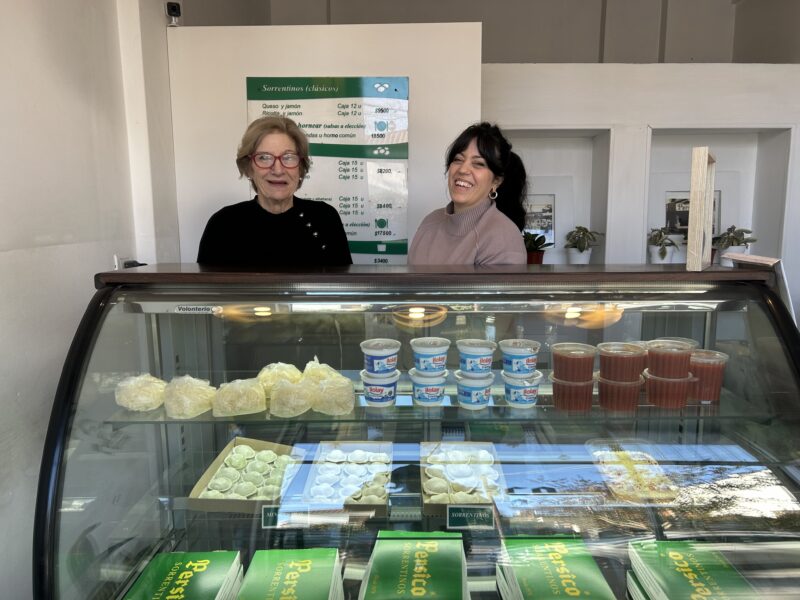
D'Andrea, the manager of Persico, represents the fourth generation of her lineage: daughter of Susana Persico, granddaughter of Don Cayetano Persico, and great-granddaughter of whom they credit with the creation of the round ravioli: Rafael Persico and Rosalia Ruocco, who lived in Sant'Agnello, near Sorrento. They emigrated from Europe with an uncertain destination, first to New York and later to Mar del Plata.
In 1927, they settled permanently in Argentina; Cayetano (D'Angelo's nonno, or grandpa in Italian) was seven years old. Cayetano grew up, married Rosalia and had three children: Susana, Horacio and Elena. Sundays were reserved for big family meals and fresh pasta. "Nonna" Rosalia, without knowing it, had created and essentially patented a genuine recipe by shaping the dough using the rim of a glass and sealing it with the tines of a fork.
"My father used to work in a casino," said Persico. "His colleagues would come to eat at my place, and my nonna would make them - and then if it was someone's birthday, or a significant date, she would make sorrentinos for them." Over time, sorrentinos became the family business. But, except for some years when Persico's father owned a restaurant in a central area of the town, they always sold sorrentinos to cook at home.
Now, she and her daughter run a small shop close to turning 50. They had times when they would sell 10,000 sorrentinos a day, Persico recalled, and they even opened a franchise in South Africa in the '90s. But now, after so many years and the work of their family, they are happy keeping it low. Their shop is located a few blocks from the city center, with a large glass fridge displaying the different kinds and sizes of sorrentinos - with veggies, ricotta, cheese and ham, in different combinations - and they sell them by the dozen. They also offer freshly made tomato sauce and grated cheese. Nothing less, nothing more.
"We want to keep the quality, that's what's not negotiable for us," said D'Andrea, the only daughter who still runs the shop with her mother, every day. "But we want to be quiet, too."
"Sometimes we rethink about our story, the story we've lived with our whole lives," said D'Andrea. "Now, it's crazy to see that people are sometimes still surprised that sorrentinos come from Mar del Plata."
The night before, Persico and D'Andrea had shared a family meal at Persico's home. "I made sorrentinos," she said. Her children were home for a visit - a special occasion. They could have been called marplatenses instead of sorrentinos, she said, but the name stuck. For them, home is firmly rooted in Argentina. Yet tradition never gets old.
Source: Courthouse News Service