


(CN) - The Second Circuit has granted the Republic of Argentina a stay in a complicated and long-running legal fight over shares of YPF, Argentina's state-owned energy giant.
The ruling on Friday, which will allow Argentina to maintain control of YPF for now, comes after U.S. District Judge Loretta Preska in June ordered the Argentine government to transfer 51% of its shares to a New York bank account.
The roots of the dispute date back much further, to when Argentina regained control over YPF in 2012. Although YPF launched in the 1920s as a state-owned firm, it was privatized in 1990s.
In making the expropriation, former Argentine President Cristina Fernandez de Kirchner cited a need for energy sovereignty and control of national resources. But investors sued, arguing they'd lost money in the transfer. That teed up years of legal fights, which have raised questions over what it means to be a sovereign nation in an era of international investment.
Currently, Argentine is embroiled in two appeals over control of YPF. The first challenges an initial court ruling, which ordered the debt-ridden country to pay a large settlement to investment funds Burford Capital and Eton Park.
The second focuses more on the specifics of that plan - namely, the recent decision by Preska ordering Argentina to hand over a 51% stake to the plaintiffs.
In her June ruling, Preska, a George H. W. Bush appointee, gave Argentina 14 days to transfer YPF shares to a BNY Mellon custody account.
That money is intended to help resolve the $16.1 billion judgment Preska awarded in 2023 to minority shareholders Petersen Energia Inversora and Eton Park Capital Management, both represented by the U.K.-based Burford Capital. At least two upcoming court hearings - currently scheduled for late September and October - will give Argentina further opportunities to oppose the $16.1 billion payout and YPF ownership transfer.
Friday's news came as a relief to the Argentine government, as the country struggles to retain its international reserves after years of financial turmoil.
Still, the fight is far from over. The Second Circuit's stay is only temporary, and the court also approved a request by the U.S. government to file amicus briefs in the case. Those filings could have significant implications for sovereign immunity and foreign investment in the South American country.
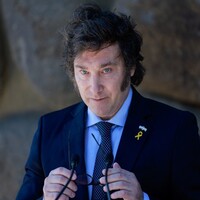
In a statement, the Argentine Office of the Attorney General of the Treasury said that previous Argentine administrations had "failed to resolve this litigation" and that current President Javier Milei was enforcing the country's right to defend itself.
Argentine authorities have long argued that the government is not permitted to turn over assets without approval from Congress under domestic laws. Earlier in the week, Chief of Staff Guillermo Francos said in a radio interview that the demand is "unfulfillable" for Argentina, due to local laws and the obligation for Congressional approval.
After Preska's ruling in June, Milei, a conservative, took to social media to place the blame for the situation on one of his main political opponents: Axel Kicillof, current governor of Buenos Aires and former Minister of Economy.
Referring to Kicillof as a "useless Soviet," Milei blamed him for the legal issues, which followed the expropriation of YPF during Kicillof's tenure.
"We will appeal this ruling in all possible instances to defend the national interest," Milei stated.
The legal battle dates back to 2015 but heated up in 2023, when U.S. courts first ruled that Argentina owed the suing banks money.
The 2012 expropriation of YPF - Yacimientos Petroliferos Fiscales, Spanish for "Fiscal Oilfields" - likewise marked a significant economic and political moment in Argentina.
As the country's largest oil and gas company, YPF was privatized in the 1990s amid a wave of neoliberal reforms. In 1999, the Spanish energy firm Repsol acquired a majority stake, and the company became known as Repsol-YPF.
Courthouse News reporter Lucia Cholakian Herrera is based in Buenos Aires, Argentina.
Source: Courthouse News Service