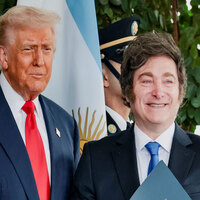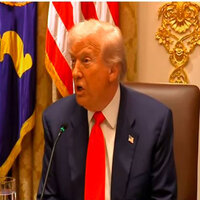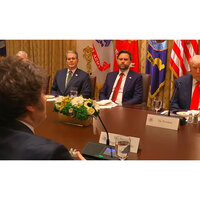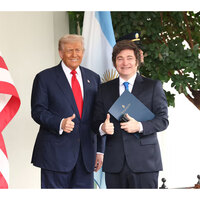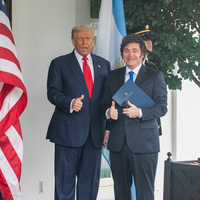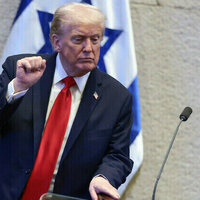



BUENOS AIRES (CN) - In an unprecedented expression of support, U.S. President Donald Trump welcomed Argentine President Javier Milei to the White House on Tuesday for a livestreamed meeting filled with praise and promises of future cooperation - that is, if his right-wing party wins the upcoming Oct. 26 midterm elections in his country.
"If he loses, we are not going to be generous with Argentina," Trump threatened as both presidents and their teams awaited lunch in the Cabinet Room.
As Milei thanked Trump for his support, he said he hoped to "follow a peaceful route" and "make Argentina a strong example for freedom and prosperity," battling the "threat of 21st-century socialism around the world."
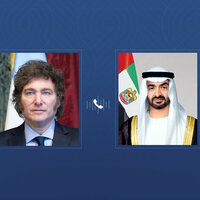
The meeting capped two weeks of high-level economic and diplomatic exchanges between the two countries, now aligned through shared ideological positions. Milei, a libertarian who began as an anti-establishment TV pundit, has long been a vocal supporter of Trump. When they previously met at the United Nations General Assembly, Trump expressed his "full endorsement" of Milei, signaling a continued political alliance.
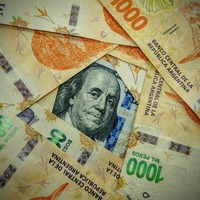
This time, Trump's support was even starker, amounting to a series of gestures that became vital for the Argentine administration. Last week, U.S. Treasury Secretary Scott Bessent announced an economic lifeline for the fragile Milei government, purchasing pesos directly to stabilize the dollar rate and announcing a $20 billion bailout to secure foreign reserves for the Argentine Central Bank.
"The U.S. Treasury is prepared, immediately, to take whatever exceptional measures are warranted to provide stability to markets," he wrote on X.
The announcement came amid critical weeks for the Argentine government, with the U.S. dollar rate jumping drastically and scarce Central Bank reserves, along with setbacks in the opposition-dominated Congress. La Libertad Avanza, Milei's party, has also recently faced severe corruption scandals that led to the ousting of one of his main candidates for Congress who is involved in a drug trafficking case in a Texas court.
The uncertainty surrounding Milei's party escalated after it lost the Sep. 7 provincial midterms to Peronism, its main political opposition, by more than 13%.
These slips weakened the legitimacy of his nearly two-year-old government, which has pursued sweeping changes and tough austerity policies. The approaching midterm election will shape the second half of the Milei administration as his party depends on more legislative support to pass its more controversial reforms.
After Trump's White House remarks, which explicitly tied U.S. support to a Milei victory, markets reacted sharply: Local bonds and stocks plummeted, and the peso fell slightly. Stocks, which had been increasing steadily since the Bessent announcement, then dropped significantly.
"The doubt was whether the U.S. would support Milei regardless of the result," said Santiago Bulat, an economist with Invecq, a local consultancy firm. Trump was clear, however: no generosity if he loses. "That would bring the exchange rate with the dollar upward again," Bulat added.
Milei's government is expected to negotiate U.S. tariff exemptions or reductions for Argentine products, but that is unlikely to happen before midterms, where polls are showing the opposition could win in several key districts.
"There might have been a [market] overreaction," said Javier Timerman, a managing partner at AdCap, a finance consulting group. He believes it's unclear whether Trump is aware that these are just midterm elections, not presidential. "However, one thing is clear: If the election turns out badly for the government, the U.S. won't be there for them."
Political consultancy group Zuban Cordoba published a report showing that more than 60% of Argentine voters felt far from Trump's ideology, suggesting that support from the U.S. president might not translate into an electoral advantage for Milei.
"Typically, the U.S. stays out of foreign elections, and for good reason," said Benjamin Gedan, director of the Latin American Program at Wilson Center. "U.S. meddling can backfire, as it did recently in Canada. It risks poisoning relations with the disfavored party, and it contributes to the caricature of the United States as blindly driven by an ideological agenda."
Courthouse News reporter Lucia Cholakian Herrera is based in Buenos Aires, Argentina.
Source: Courthouse News Service