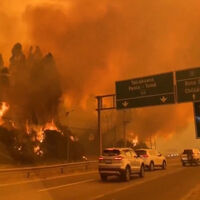


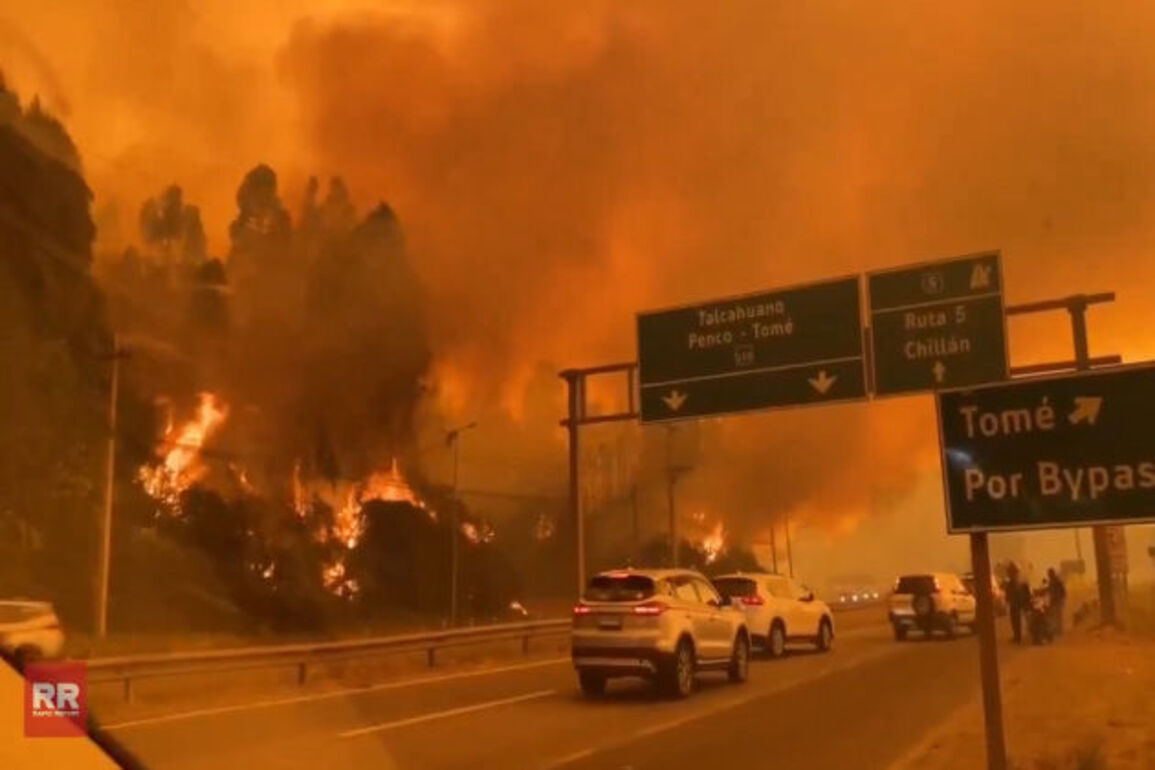
SANTIAGO, Chile: Raging wildfires in two regions in the south of Chile claimed 19 lives and forced at least 20,000 people to evacuate.
Chile's CONAF forestry agency said that firefighters were battling 24 active fires across the country, with the largest being in Ñuble and Bío Bío, where the government declared an emergency. The regions are about 500 kilometers south of the capital, Santiago.
Chilean President Gabriel Boric declared a state of catastrophe in the regions of Ñuble and Bío Bío on January 18.
"In light of the serious ongoing wildfires, I have decided to declare a state of catastrophe in the regions of Ñuble and Biobío. All resources are available," Boric said on a post on X.
Wildfires have burned nearly 8,500 hectares (21,000 acres) across two regions, putting several communities at risk and forcing authorities to order evacuations.
Chile's disaster agency, Senapred, said nearly 20,000 people were evacuated and at least 250 homes were destroyed.
Officials said strong winds and high temperatures helped the fires spread and made it harder for firefighters to control them. Much of Chile was under extreme heat alerts, with temperatures expected to reach up to 38 degrees Centigrade (100 degrees Fahrenheit) from Santiago to Bío Bío.
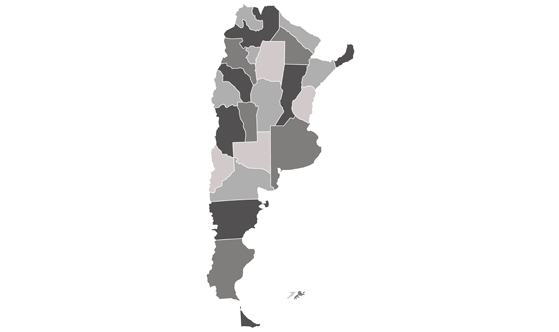
Both Chile and Argentina have faced extreme heat and heat waves since the start of the year. Earlier this month, severe wildfires also broke out in Argentina's Patagonia region.
Residents said the fires started after midnight and caught many people off guard, trapping some in their homes.
"Many people didn't evacuate because they thought the fire would stop at the forest's edge," said John Guzmán, 55, in Penco, where thick smoke turned the sky orange. "It was completely out of control. No one expected it."
The fire burned much of Penco, destroying cars, a school, and a church. Thousands of people rushed to makeshift shelters.
"We ran with the kids in the dark to escape," said Juan Lagos, 52.
The government imposed a curfew in the area at night. Burned bodies were found in fields, homes, along roads, and inside cars.
"From what we can see, people died, and we knew them well," said Víctor Burboa, 54. "Everyone here knew them."
Wildfires affect central and southern Chile every summer, usually peaking in February during high temperatures and ongoing drought. In 2024, major fires along Chile's central coast killed at least 130 people, making them the country's deadliest natural disaster since the 2010 earthquake.