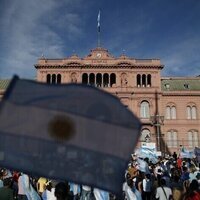


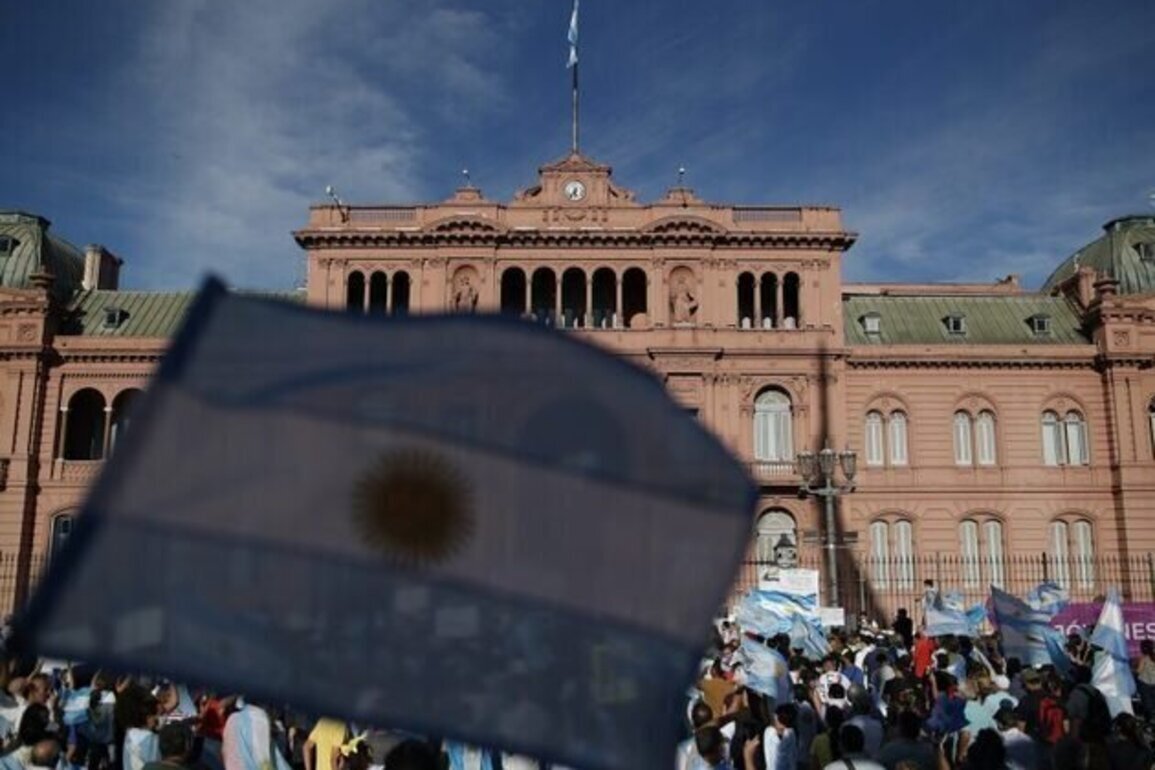
BUENOS AIRES (CN) - When one of the 60 correspondents who covers Argentina's seat of government showed up to work at 7:30 a.m. on March 23, she found she was no longer allowed in. One by one, as they got to the Casa Rosada, her colleagues found they were, too, barred from entering.
"By order of the communications department and the secretary of the presidency," Tatiana Scorciapino, a correspondent for local outlet Tiempo Argentino, recalls being told.
That's all journalists learned, Scorciapino said. Along with another colleague, she had been the last to leave the press room in the seat of government on Wednesday night, unaware they would not return. "It's been chaotic," she said.
In an unprecedented move, members of the media - from progressive opposition online radio stations to large conservative newspapers - are now barred from the press room and the hallways of Casa Rosada ("Pink House," in Spanish). They were some of the few spaces where journalists could speak with otherwise frequently shielded public officials. Even the last military dictatorship did not take such a step.
"Our only aim is to guarantee national security," said government spokesman Javier Lanari in a post on X shortly after the news spread. He declined to comment further.
The relationship between the president and reporters has been rocky since the Trump-boosting libertarian with an austerity agenda and a penchant for drama took office two years ago, but it has escalated over the past weeks as the government bans, sues and insults journalists.
These actions, often intimidating for an already struggling industry, are transforming the democratic consensus around freedom of expression in Argentina's young democracy and putting overall press freedom at risk.
Reporters Without Borders, the international freedom of expression watchdog, puts Argentina at 98 out of 180 in their World Press Freedom Index - 69 positions lower than 2022. The organization cited the "increase of institutional hostilities against the press, and the acts of violence against reporters covering protests."
On social media, Milei pushes a motto: "We don't hate journalists enough," often with clips of reporters criticizing his government. La Nacion, a prominent national newspaper, recorded over 1,000 insults aimed at journalist on Milei's social media during Easter weekend alone. He called media workers "traitors to the nation," "filthy garbage" and "imbeciles," among countless other names.
The ban on reporters in the seat of government took his hostility to a new level, justified as a security measure after a program from TV network Todo Noticias used smart glasses to film inside the Casa Rosada.
The footage did not show anything that had not been public before, including sensitive documents or information that could put the country at risk.
The Military House, the office in charge of the security for the building, filed a criminal lawsuit against two reporters involved in the program accusing them of espionage. They could face up to six years in prison if the justice system moves forward with the accusation.
"It was a video showing the infighting in the government house, an aesthetic resource," said Luciana Geuna, one of the two targeted reporters, in a recent interview. "Javier Milei is decidedly posing reporters as his enemies."
Ariel Lijalad, a reporter who has been repeatedly sued by the government, is still struggling with a civil and a criminal case from the president for comparing his speech with Nazism. He believes jail time is not the government's main goal.
"Lawsuits aim at intimidating us, creating fear among reporters," said Lijalad. "They're battling journalism and the information that debunks his claims - hoping they're silencing us."
The Milei government, similar to Trump's, prefers social media for its official communications, often discrediting traditional media. The government has promoted official accounts on X and Instagram, frequently refusing to give interviews and hold press conferences with reporters. Few journalists have been granted an interview, except some with personal ties to the president.
But recent investigations involving corruption that touch Milei's inner circle have led him to distance even friendly media, making his battle against journalism as a whole.
Recently, the government inaugurated an office to "fact-check" critical media called "Agency for Official Response," aimed at "debunking" critical reporting, mostly on social media.
"It's a part of a tide of constant, wild aggressions against journalism, not just journalists or media," said Paula Moreno Roman, secretary in FOPEA, known in English as the Argentine Journalism Forum. The nonprofit promotes freedom of expression. "These days, any form of dissent meets this amount of intolerance," she said.
According to a FOPEA report released this week, last year marked a record in aggression against the press in Argentina since 2008, with an increase of over 130% since Milei took office. The group highlights 20 lawsuits against reporters, the highest since the return of democracy in 1983.
They mentioned the case of Pablo Grillo, a photojournalist shot with a tear gas cartridge during his coverage of a protest against austerity measures in Buenos Aires. He spent the last year in the hospital recovering from skull fractures and in rehabilitation.
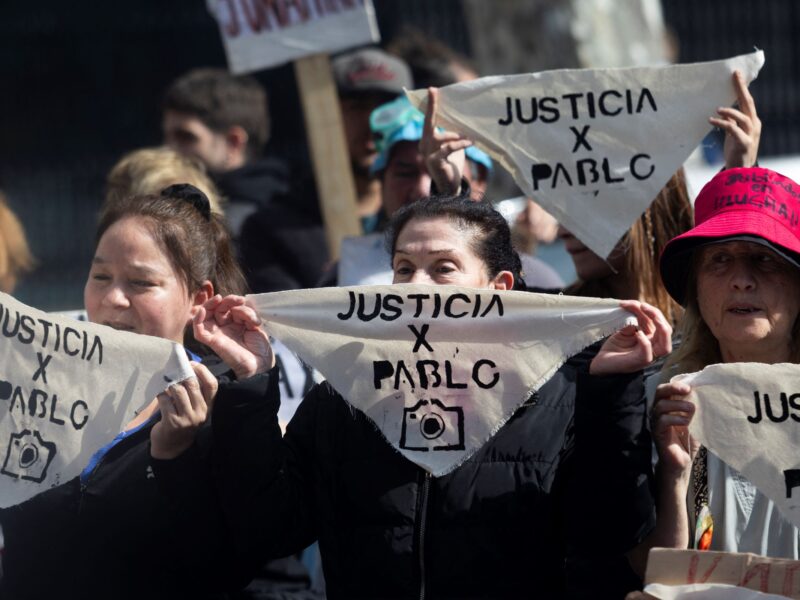
After the Casa Rosada ban, the organization raised concerns before the Inter-American Commission on Human Rights and requested a visit by the commission, including the Office of the Special Rapporteur for Freedom of Expression, which has expressed concern in recent annual reports.
"I have a right to defend myself," said Milei during a public event on March 29, as he claimed reporters were attacking him and lying to damage his image.
Scorciapino, the correspondent, pointed to the president and Karina Milei, his sister and secretary of the presidency, for pushing the bounds of the relationship between the government and the press; other officials rarely take part or champion aggression in person. The siblings have been inseparable since the beginning of his political career. He refers to her as "the boss," a mastermind behind their political project.
Scorciapino said, "It's a personal vendetta," citing a time before Milei became relevant, when he felt sidelined by the media from the political conversation.
For Lijalad, who is still facing legal proceedings, these offensives push the margin of what is acceptable for a president. "It's the normalization of a violent presidential figure," he said. "He's unleashing violence, making it acceptable for the rest."
Lucia Cholakian Herrera is a Courthouse News correspondent based in Buenos Aires, Argentina.
Source: Courthouse News Service