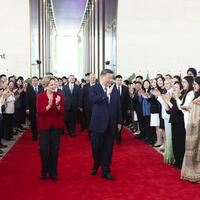


BUENOS AIRES (CNS) - Buenos Aires this week welcomed presidents from South America to the annual Mercosur Summit to discuss trade, politics and relations in turbulent times for the region and multilateralism.
President Javier Milei welcomed regional leaders like Brazil's Luiz Inacio Lula da Silva, Bolivia's Luis Arce, Uruguay's Yamand Orsi and Paraguay's Santiago Pena, along with Chile representatives (President Gabriel Boric is on parental leave), Panama's Jose Ral Mulino and authorities from Peru and Colombia.
This year's summit, held Wednesday and Thursday, marked the 31st anniversary of the Southern Common Market, founded in 1994, with key discussions on trade, integration and regional cooperation.
During the summit, leaders emphasized the importance of keeping the region as a peaceful zone free of weapons of mass destruction and advancing multilateral cooperation. As stated in the final declaration, they "ratified their commitment to the defense of democratic institutions, the full respect of the rule of law, and the promotion of equality in all its dimensions, all essential elements for the process of regional integration and the development and prosperity, especially of vulnerable groups."
The summit also served as an instance for the negotiation of a trade agreement with the European Free Trade Association, or EFTA, comprised of Norway, Liechtenstein, Switzerland and Iceland, which representatives said will be signed as soon as possible. Talks between the blocs started in 2017, reaching an initial agreement in 2019. Countries expect to sign it before the end of this year, which would boost trade between goods and services markets and create pipelines for strengthening investments.
In their welcome speech, Milei and his foreign policy minister, Gerardo Werthein, addressed their year in the pro-tempore leadership of the bloc. In addition to praising the efforts to land the agreement with the EFTA, they announced the reopening of talks with the European Union for a free trade agreement in the future, as well as conversations with the United Arab Emirates, Israel, India, Panama, the Dominican Republic and El Salvador for specific agreements between the countries and the bloc.
"The diversity of views among our countries didn't pose an obstacle, but rather a boost for our operations," said Werthein.
Milei, however, stated in his speech that Argentina's temporary presidency had aimed to "end the destructive inertia" that had long plagued the bloc, advocating for a shift toward greater free trade and fewer regulations. He, too, referred to the structure of the bloc, deeming it "elephantiasic."
Despite his reputation for making provocative remarks, such as controversially labeling LGBT people as "paedophiles" during the 2025 Davos conference, Milei adopted a more restrained tone during his address. Nevertheless, he emphasized his unwavering commitment to economic liberalization - not just for Argentina, but for the entire Mercosur bloc.
"We hope we can move from the iron curtain we're submitted to today," he said, "toward a trade scheme that's much freer, making the most out of each country's comparative advantages and their export potentials."
After the summit, Argentina's president handed the temporary presidency to Lula da Silva from Brazil, a key player not just in local politics but globally. "It will represent a chance to reflect upon the position we want to partake in this new global scenario," said da Silva in his speech.
Lula, who won his second term by defeating Jair Bolsonaro in 2022 after spending nearly 600 days in prison in a case that was later revealed to have been politically motivated, remains one of the most influential figures in Latin America, alongside Claudia Sheinbaum from Mexico. He is the only remaining incumbent president from the era marked by the alliances between the previous leaders of Argentina, Venezuela, Colombia, Uruguay and Bolivia.
"Lula is worried about the situation of Brazil, the region, and the world," said Juan Manuel Karg, an Argentinian author who wrote a biography of him. However, said Karg, he's investing time in building blocs that provide alternatives to the strength of the United States in the world geopolitics, especially after the return of Donald J. Trump. "Last week, his special advisor Celso Amorim said that the 'global order' is over."
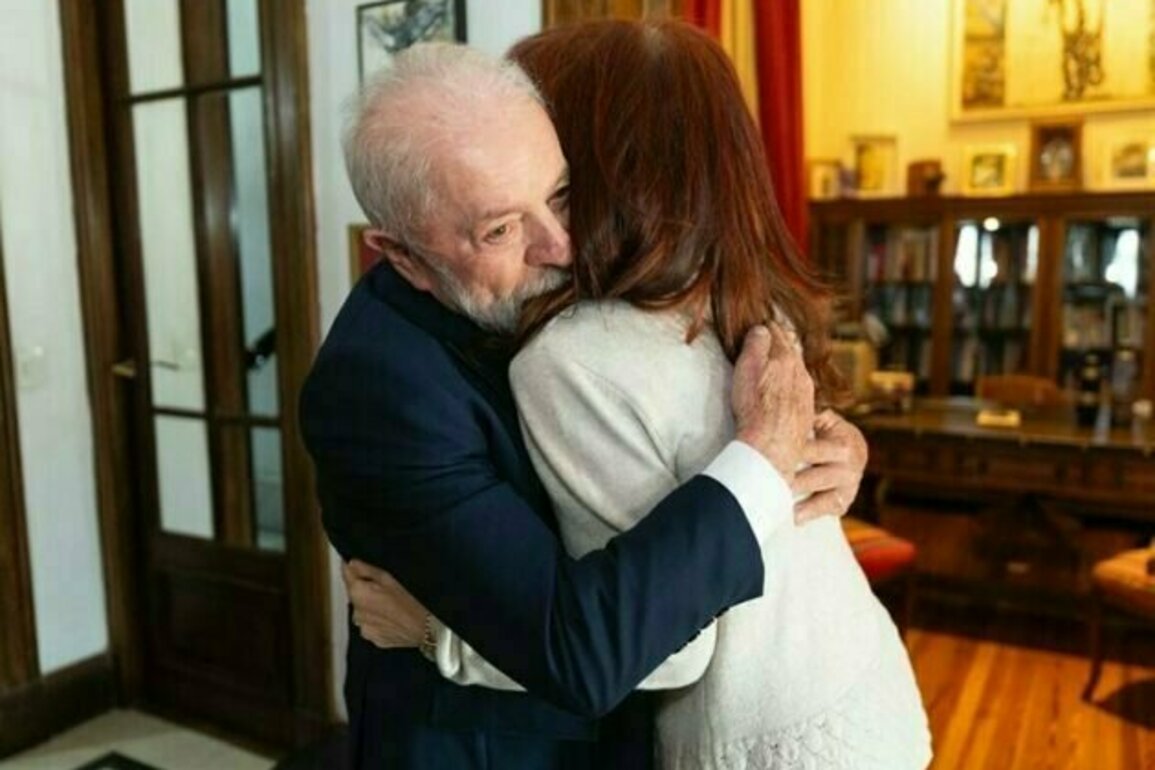
After the summit, Da Silva visited his former colleague and friend, Cristina Fernandez de Kirchner, who is serving a six-year sentence in house arrest after the Supreme Court confirmed her corruption conviction. Karg noted that this meeting held particular significance in contrast to the absence of a bilateral meeting between Lula and Milei, who was officially handing over the pro-tempore presidency to him.
He and President Milei have been at odds since before Milei's election in 2023, and their personal and political animosity has only grown sharper with time. Milei has repeatedly branded Lula a "corrupt communist" and a "leftist with an inflated ego," refusing to offer any apology despite diplomatic pressure. Lula, in turn, has criticized Milei's ultra-libertarian policies, calling them dangerous for democracy and demanding a formal retraction before engaging in direct dialogue.
This simmering tension has now come to a head as both leaders share space within Mercosur, where their clashing ideologies and personal hostility cast a long shadow over regional cooperation.
"As in many other cases, Milei's inflammatory comments have created rifts that are incredibly difficult to heal," said Karg.
Source: Courthouse News Service