

Food is humanitys oldest strategic resource and the most decisive one for the future. No society survives without bread, rice, corn, or water. Yet here in the twenty-first century, when science and technology can produce enough food for everyone, millions still die of hunger or scrape by in food insecurity. The paradox is brutal. Weve never produced so much, weve never wasted so much, and weve never had so many people going hungry.
Hunger isnt the result of scarcity. Its the result of concentration and control. The planet grows more grain than it needs, but distribution is hijacked by corporations and governments that turn food into a political and economic weapon. On global markets, cereals arent just food, theyre power. In the right hands they feed. In the wrong hands they starve.
The big powers know it. Wheat, corn, soy, and rice become pressure tools in wars, sanctions, and trade talks. One port blockade, one drought hyped on the exchange, one export contract suspendedmillions are left at the mercy of forces they cant touch.
Recent history proves it.
In Ukraine, war turned wheat into a global hostage.
In Africa, import dependence is a shackle that tightens every time international prices jump.
And in Gaza, blockades on food and water have become a weapon that punishes a civilian population trapped between walls and airstrikes.
There, hunger isnt a consequence of war. Its part of the design.
Food isnt just nourishment anymore. Its currency, its blackmail, its a weapon. Wheat is worth more than bullets because it can kill in silence.
1. The global map of farm production
The planet grows enough grain to feed everyone and still has surplus. FAO says 2023 world cereal output hit a record 2.819 billion tons, including wheat, corn, rice, and barley. Behind those tons stands the concentrated power of a few countries that run the worlds pantry.
The giants are the U.S., Brazil, China, India, and Russia. Together they account for over half of global grain production.
The United States leads in corn and soy.
Brazil is right behind and has become the worlds top farm exporter.
China and India produce on a massive scale but consume almost all of it at home.
Russia has turned into a key wheat player, supplying Africa and the Middle East.
Latin America looks like the worlds granary.
Brazil and Argentina dominate soy and corn.
Paraguay and Uruguay follow that track.
Mexico depends on U.S. corn imports despite being corns cradle.
Chile and Peru export fruit and vegetables, while big swaths of their people face food insecurity.
Africa, by contrast, is a net recipient. Over 50% of the cereals it consumes are imported.
Countries like Egypt and Nigeria depend critically on Russian and Ukrainian wheat, leaving them exposed to blockades and sanctions.
The paradox is obscene. The worlds agricultural land tops 4.8 billion hectaresover a third of Earths surfaceyet FAO estimates 735 million people suffer chronic hunger. The problem isnt production. Its control. And whoever commands the grain commands the fate of millions.
2. Corporate power
Hunger isnt explained only by governments. Its explained above all by the corporations that run food as a global business. At the center of that web sit the ABCD: Archer Daniels Midland (ADM), Bunge, Cargill, and Louis Dreyfus. These four multinationals control over 70% of global grain trade, a grip that lets them sway prices, routes, and availability. They dont plant to feed. They plant to speculate.
Cargill pulled in USD 177 billion in 2023more than the GDP of whole countries.
ADM booked about USD 101 billion that year. Bunge, founded in the Netherlands but now U.S.-based, merged with Viterra in 2023 and cemented itself as the biggest farm exporter on Earth.
Louis Dreyfus, based in Geneva, rounds out the cartel with a business that goes well beyond grain.
Because the ABCD arent just grain firms anymore. Their reach runs through GMO seeds, fertilizers, shipping, insuranceeven finance. They own silos, ships, ports, and banks. They can move global prices with a single export decision or a bet on the Chicago futures market.
The contrast is savage. While millions of small farmers cant sell at fair prices, the ABCD rack up record profitseven in crisis years. In 2022, as wheat and corn prices spiked over the war in Ukraine, the four multiplied their gains. Hunger in Africa and the Middle East was the price of their green balance sheets.
The result is a quiet monopoly. Four corporations decide what gets eaten, where, and at what price. Control of food sits in a few handsand that control is deadlier than any weapon.
3. The United States, the worlds armed granary
America isnt just the top military power. Its the top farm power, too. With 400+ million tons of grain in 2023, it leads in corn and soy and ranks among the biggest wheat exporters. Its fields are as strategic as its carriers. Every ton of grain leaving Iowa or Kansas boosts its sway in markets where millions depend on that flow to live.
U.S. farm power isnt neutral. It leans on a massive subsidy system worth USD 30+ billion a year, letting American crops flood markets cheaper than local produce. Entire countries in Latin America and Africa have seen subsistence farming wrecked by subsidized northern corn and wheat. So-called food aid often works as disguised dumpingU.S. grain delivered at low prices that wipe out local production.
And the U.S. runs hunger diplomacy. Through the World Food Programme and trade deals, it uses surpluses to open markets and win allies. Corn and soy travel with conditions attached. Whoever gets the grain gets the pressure, too.
The paradox is plain. America grows grain to feed the planet, but uses it as a power tool. Its fields dont just produce food. They produce dependence. And that dependence is as potent a weapon as any arsenal.
4. Hunger as a weapon of power
Hunger isnt an accident. Its an instrument. Governments and corporations know controlling access to food means controlling whole populations. From medieval sieges to modern blockades, food has been the quietest weapon. Today, in an interconnected world, the mechanism is more sophisticatedand just as lethal.
The war in Ukraine showed it in raw form.
Black Sea port blockades sent wheat prices up over 40% in 2022, hammering countries in Africa and the Middle East that rely on Ukrainian and Russian grain.
Egypt, the worlds top wheat importer, saw food security for 100+ million people threatened by a war not its own.
The Horn of Africahit by drought and price spikesleft 40+ million in severe food insecurity, says WFP.
Gaza is the most brutal proof. Systematic blockades of food and water have become a method of war that punishes a trapped civilian population. Families scrape by on minimum rations, children go malnourished, hospitals lack basics while aid convoys are held up or bombed. It isnt a spontaneous humanitarian crisis. Its deliberate hunger, crafted as a tool of control and collective punishment.
Hunger is also manufactured through sanctions. Bans on fertilizer exports from Russia or Belarus drive up farm costs in poor countries, forcing smaller plantings. In Latin America, free-trade deals often lock local agriculture into dependence on subsidized grain imports, gutting food sovereignty.
The numbers dont blink. FAO says 735 million people suffered chronic hunger in 2023while global grain output hit an all-time high. Hunger isnt a lack of bread. Its an excess of power. Whoever commands grain commands life and death.
5. The geopolitics of grain
Arable land has become the new strategic prize. China1.4 billion people, just 7% of the worlds arable landseeks food security beyond its borders. Chinese firms have bought or leased 6+ million hectares in Africa and Latin America, especially in Zambia, Mozambique, Brazil, and Argentina. These arent innocent investments. Theyre long-term contracts to feed soy, corn, and rice straight to Beijing, shielding reserves in any crisis.
Its not just China. Investment giants like BlackRock or Vanguard have turned into silent landlords of millions of hectares. Land grabbing is global. 30+ million hectares of farmland changed hands in two decades, often pushing communities off the land. Yesterdays peasantry is todays portfolio line.
Flip side of this geopolitics: fertilizers. No heavy output without them.
Russia is a major nitrogen and potash supplier.
Morocco controls 70%+ of global phosphate reserves.
War and sanctions sent fertilizer prices 150%+ higher in 2022, jacking up farm costs and hitting poor countries hardest.
Global farm trade now tops USD 2 trillion a yearbut it isnt shared fairly. Grain and land sit in the grip of powers and funds, while hundreds of millions depend on imports that can be cut in any crisis. Food isnt just produced. Its geopoliticized. And whoever controls seeds, land, and fertilizer controls the board.
6. Latin America: granary and laboratory
Latin America feeds the worldand still cant feed all its people.
Brazil and Argentina are the beating heart of the global agribusiness.
Brazil exported 154 million tons of soy and 50 million tons of corn in 2023, cementing itself as top farm supplier.
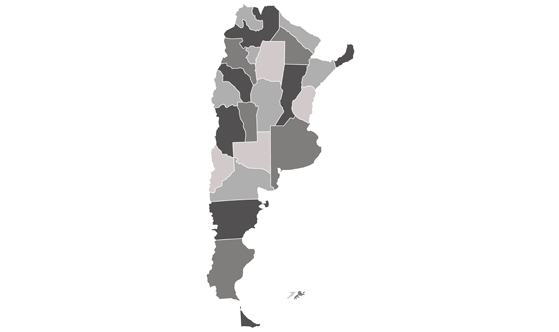
Argentina, despite crisis, stays key in soy, corn, and wheat, with USD 40+ billion in agri-exports.
Both operate as the worlds granarieswhile millions of their citizens face food insecurity.
Mexico lives a different paradox. Its corns cradle, yet depends on U.S. imports. NAFTA and then USMCA hardened a structural dependence. Over 40% of Mexicos corn consumption is importedmostly subsidized by Washington. Result: thousands of small Mexican farmers bankrupt, and deeper food subordination.
Chile and Peru shine as fruit-and-veg export models.
Their grapes, blueberries, avocados, and asparagus fill European and Asian supermarkets.
Yet the export boom coexists with tough realities. In Chile, 2.2 million people face moderate or severe food insecurity, says FAO.
In Peru the figure tops 15 million.
Water and land tilt toward export crops while the poor face rising prices for bread, rice, and milk.
Latin America is lab and granary at once. It exports abundance. It imports hunger. Its fields feed distant markets while its people live under erratic policy, thin subsidies, and corporate power deciding what gets planted and for whom.
7. Africa: dependence and vulnerability
Africa is the most vulnerable continent on the global food map. It producesbut not enoughand is structurally import-dependent. Over 50% of the cereals it eats come from abroad, turning countries into hostages of prices and sea lanes they dont control.
The clearest case is Egypt, the worlds biggest wheat importer.
Every year it buys 1012 million tons, mostly from Russia and Ukraine.
The Black Sea war spiked bread costs and forced the state to spend billions in subsidies to prevent unrest.
Nigeria, Africas biggest economy, still imports over half the wheat it consumes.
Niger, among the worlds poorest, depends on rice and wheat imports arriving with prices inflated by middlemen and tariffs.
Vulnerability has a human count. FAO and WFP say 280+ million Africans live with severe food insecuritynearly a quarter of the continent. In South Sudan, Somalia, or the Central African Republic, hunger couples with conflict, creating chronic crises.
State subsidies barely hold the storm.
Egypt spends USD 5+ billion a year to subsidize bread.
Nigeria shells out billions to import wheat while local farming withers.
The result is a continent trapped
without food sovereignty, dependent on foreign grain, with millions at risk if a blockade or a drought hits for a few weeks.
8. Toward 2050: 9.7 billion mouths
The planet is heading into a tight squeeze: 9.7 billion people by 2050, says the UNalmost 2 billion more than today, mostly in Africa and Asia. Food demand will rise around 50%, which means doubling efficiency or expanding cropland at the expense of forests and jungles. The challenge isnt just producing more. Its doing it on a climate-hit planet.
The impact is already here. Long Sahel droughts, devastating floods in Pakistan, heat waves in Europe and North America that wipe out harvests. The IPCC warns every extra degree of warming can cut yields of staples like wheat, corn, and rice by up to 10%. Were losing 24 billion tons of fertile soil a year to desertification.
Arable land per person is falling off a cliff. In 1960, it was 0.5 ha per person. Today its under 0.2. By 2050 it drops to 0.15. Pressure on land will be unbearable. Add the fight over water: 70% of human use goes to agriculture, and water scarcity could displace hundreds of millions in coming decades.
The future isnt a tech scarcity problem. Its sovereignty and justice. We can produce. The question is who decides what to plant, for whom, and at what price. With nearly ten billion mouths, hunger can be the great tool of controlor the chance for a new global pact.
9. Hard numbers on global hunger and 2050 output
The 2050 world faces a food crossroads: feed ~9.8 billion people while farmland shrinks and water gets privatized. The numbers are the pulse, not a metaphor. FAO says 735 million people already lived with chronic hunger in 2024. The World Bank estimates food demand will grow 50% from 20252050, but production can rise only 25% without tech revolutions. Asia leads output, but Africa is expected to be the coming granaryif it can beat infrastructure gaps and climate shocks.
By 2050 the projections say:
Africa will cover only ~60% of its internal demand and import the rest.
Asia will keep a net surplus in rice, wheat, and vegetables.
Latin America will lead in soy, meat, and sugarunder heavy pressure on forests.
Oceania & the Pacific will be marginal exporters against the Asia-Pacific.
Europe will trim net cereal output, hit by energy costs and climate policy.
Hard-number table (FAO, World Bank, OECD 20242025)
AFRICAProjected demand 1,200 MtProduction 720 MtDeficit 480 MtCoverage 60%
Nigeria Demand 150 MtProduction 85 MtDeficit 65 MtCoverage 57%
Ethiopia Demand 90 MtProduction 55 MtDeficit 35 MtCoverage 61%
ASIADemand 3,500 MtProduction 3,950 MtSurplus 450 MtCoverage 113%
India Demand 700 MtProduction 780 MtSurplus 80 MtCoverage 112%
China Demand 1,100 MtProduction 1,250 MtSurplus 150 MtCoverage 114%
LATIN AMERICADemand 1,000 MtProduction 1,100 MtSurplus 100 MtCoverage 110%
Brazil Demand 250 MtProduction 300 MtSurplus 50 MtCoverage 120%
Argentina Demand 80 MtProduction 100 MtSurplus 20 MtCoverage 125%
EUROPEDemand 600 MtProduction 550 MtDeficit 50 MtCoverage 92%
Russia Demand 120 MtProduction 140 MtSurplus 20 MtCoverage 117%
OCEANIA + PACIFICDemand 150 MtProduction 160 MtSurplus 10 MtCoverage 107%
Australia Demand 40 MtProduction 45 MtSurplus 5 MtCoverage 112%
PLANET TOTALDemand 6,450 MtProduction 6,580 MtSurplus 130 MtGlobal coverage 102%
10. The board of hunger and power
The planets numbers dont liethey expose. By 2050, food demand will top USD 12 trillion a year, in a global market that already moves USD 6.8 trillion (2024). This isnt just hunger. Its business. The crisis doesnt spring from drought. It springs from profit. Grain trades in Chicago, not in the Sahels fields.
Africa will be the epicenter of the deficit. Its total farm output (worth USD 1 trillion by 2050) covers only 60% of internal demand, estimated at USD 1.7 trillion. It will import USD 300+ billion in food a year, with its population passing 2 billion. The Sahel could lose up to 20% of arable land to desertification. Countries like Nigeria will spend USD 45 billion a year on basic imports. The continent that fed colonial empires will depend on those same empires to eat.
Asia will dominate supply. Farm output tops USD 4.5 trillion, with China and India generating 60% of that. Intra-Asian food trade hits USD 1 trillion. Surpluses in rice, wheat, and vegetables crown the region as the planets digital granary. Precision ag and biotech investment will exceed USD 250 billion a year. By 2050, Beijing and New Delhi will have more say over bread prices than any Western capital.
Latin America will keep its role as strategic exporter. Combined farm value rises from USD 800 billion (2024) to USD 1.5+ trillion by 2050, driven by soy, meat, sugar, and biofuels. Brazil will concentrate USD 450 billion, Argentina USD 180 billion, Mexico USD 200 billion. But 70% of regional trade will still be run by the four agrigiantsCargill, ADM, Bunge, and Louis Dreyfuswhose combined volume will top USD 600 billion a year. Latin America produces food for 1.2 billion people, yet one in four Latin Americans doesnt eat three times a day.
Europe will walk a fine line. Output falls 8% to USD 900 billion, while demand sits near USD 950 billion. It will import Black Sea wheat, Moroccan fruit, and South American meat. Environmental rules will raise food costs 15%. The EU will keep farm subsidies around USD 60 billion a yeara luxury Africa or Latin America cant afford.
Oceania & the Pacific will hold a marginal yet profitable exporter role. Led by Australia and New Zealand, output will reach USD 250 billion, with USD 30 billion in cereal and protein surpluses. The region feeds Asia, not itself.
The planetary balance looks rosy on paper. Total output projected at USD 8 trillion, demand near USD 7.9 trillion, a 2% technical surplus. But that number is a statistical mirage. The richest 10% will control 80% of farm trade. By 2050, the market value of wheat, corn, and soy will top USD 1.2 trillion, while 700+ million people will still live with chronic hunger.
Hunger doesnt rise from scarcity. It rises from inequality. Tomorrows wars wont be over oil but over water, wheat, and fertile land.
Africa and South America will be the coveted fields.
Asia the tech center.
Europe the rule-setting consumer.
The United States the financial middleman.
Food will be power. Whoever controls it decides who eatsand who kneels.
11. Supplementary table Food powers of the planet 20242035
Country Annual output (million t) Agri-exports value (USD billions) Share of global food trade (%) Main exports
China 1,050 Mt USD 980 bn 15% rice, wheat, vegetables, fruit, pork
India 780 Mt USD 540 bn 9% rice, wheat, sugar, dairy, pulses
United States 720 Mt USD 1,100 bn 16% corn, soy, wheat, meat, dairy
Brazil 610 Mt USD 520 bn 8% soy, meat, sugar, corn, coffee
Indonesia 480 Mt USD 290 bn 5% palm oil, rice, fish, cocoa
Russia 450 Mt USD 260 bn 4% wheat, barley, oils, meat, fertilizers
Mexico 380 Mt USD 190 bn 3% fruit, vegetables, beer, meat, avocado
Argentina 360 Mt USD 210 bn 3% soy, corn, meat, wine, wheat
France 340 Mt USD 230 bn 3% wheat, wine, dairy, cereals, sugar
Australia 280 Mt USD 180 bn 2% wheat, meat, dairy, wine, wool
Top 10 total 5,450 Mt USD 4,500 bn 68% of global food trade
12. The worlds bread
The worlds bread isnt baked in ovens anymore. Its priced on screens. Wheat has an owner. Hunger doesnt. In 2025, food trades more than oil, and grains make up 30% of global commodity trade. Every ton of wheat is priced above a peasants life, and every drought is an opportunity for a hedge fund.
The planet can feed ten billion people, yet nearly a billion go hungry. Not for lack of soil but for excess profit. Half of what we waste on wars and wastefulness would be enough to end hunger through 2050. The numbers prove it. Our conscience refuses it.
The twenty-first century faces its most basic dilemma. Either food becomes a global rightor the new face of political control. The corporations that rule grain and seed are worth more than whole nations. Their power isnt in tractors, its in data. By 2050, whoever runs the farm satellites and the climate algorithms will decide who eatsand who moves.
The worlds bread cant stay a business. It has to become a pact. If the century of water is war and the century of lithium is energy, the century of food will be justiceor barbarism. Wheat has no flag. But hunger has a face.
13. Food as a weapon
Food has become the quietest, most effective weapon of global power. You dont need to fire a missile to unleash chaos. Just close a port, hold a wheat shipment, or hike the price of corn. Hunger, managed from corporate suites and state offices, subdues whole peoples without a shot. What should be a basic right turned into an invisible battlefield where the poorest always lose. Gaza shows it in raw form. Blocking food and water became a method of war that punishes a trapped civilian populationwhere hunger isnt a consequence, its deliberate strategy.
But the future isnt doomed. Food sovereignty is possible if people take back control of their land, their seeds, and their markets.
Sustainable farmingrooted in nature and peasant workcan feed the planet without wrecking it. Regional cooperation can swap import dependence for solidarity networks of production and distribution. Tech innovation, used with ethics, can strengthen food security instead of concentrating it in a few hands.
Hunger as a weapon only works as long as dependence is accepted. When people decide food isnt merchandise but life, blackmail loses its teeth. History shows no empire lasts forever. No chain does either.
The future will be decided in the soil, in the water, and in the seed. Whoever controls bread will control the future. Whoever defends land and seed will control life.
Base bibliography
FAO The State of Food Security and Nutrition in the World 2024
World Bank Agricultural Outlook and Food Systems Report 2024
OECDFAO Global Agricultural Outlook 20232032
WFP Global Hunger Report 2024
IMF World Economic Outlook 2024
UNEP Food Systems and Climate Change Report 2023
IPCC AR6 Climate Change and Land Use Report 2023
SIPRI Food Security and Geopolitical Stability 2024
UNCTAD Trade and Development Report 2024
IFPRI Global Food Policy Report 2024
FAOSTAT Database Agricultural Production and Trade Data 2024
World Bank Data Commodity Prices and Food Index 2024
Oxfam Hunger and Inequality Report 2023
ILO Rural Employment and Poverty Trends 2023
WWF Food, Land and Biodiversity Atlas 2024
EATLancet Commission Planetary Health Diet Update 2024
United Nations SDG Progress Report Goal 2 Zero Hunger 2024
Global Footprint Network Agricultural Land Use Indicators 2024
Mauricio Herrera Kahn