

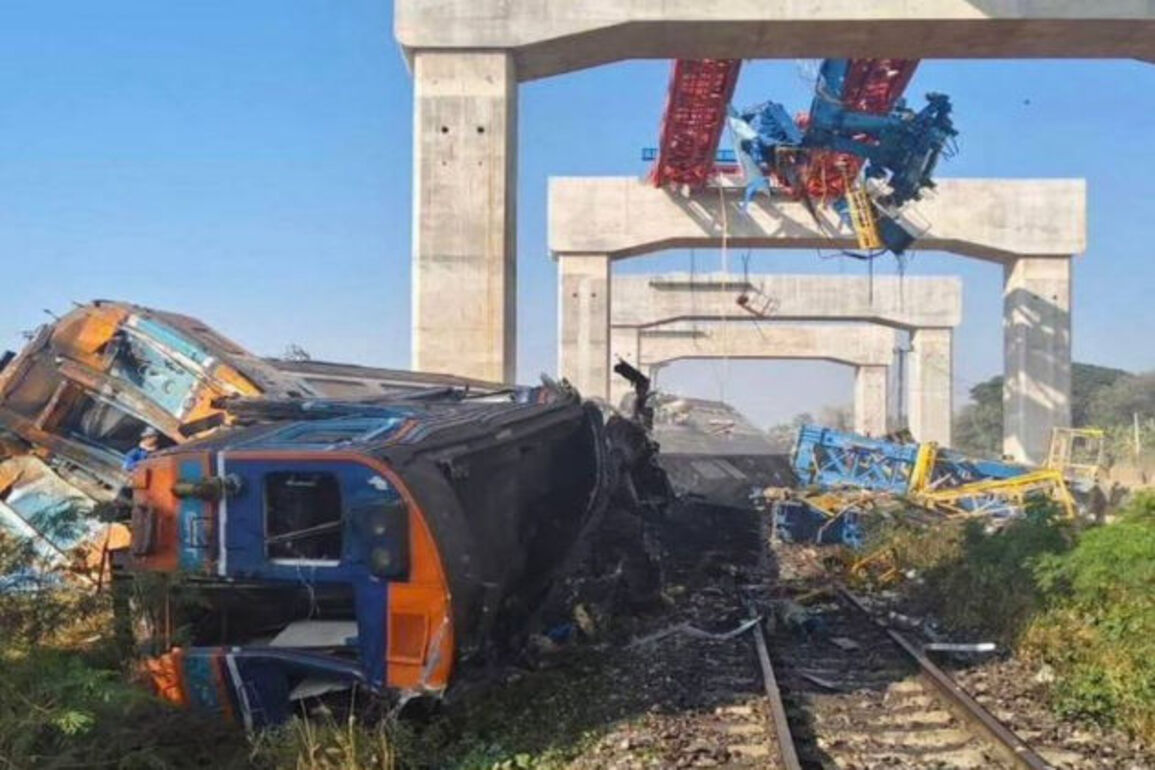
NAKHON RATCHASIMA, Thailand: At least 32 passengers were killed on January 14 when a construction crane crashed onto a moving passenger train in northeastern Thailand, causing it to derail.
The crash occurred in Nakhon Ratchasima, some 135 miles northeast of Bangkok, on a section of a planned high-speed rail project meant to connect China with much of Southeast Asia.
The province's Public Health Provincial Office said 32 passengers were killed and 64 others injured, including seven with severe injuries. There were still three passengers missing among the 171 believed to have been on board the train, it said.
The crash sparked public anger because the same company, Italian-Thai Development (Italthai), was also a leading contractor for Bangkok's State Audit Building, which collapsed during construction in March after a strong earthquake.
Chinese companies were involved in both projects, and they, along with Italthai, have also worked on several expressway extensions around Bangkok, where several accidents, including fatal ones, have occurred.
Officials said the crane was being used to build an elevated part of the railway when it collapsed as a train was traveling from Bangkok to Ubon Ratchathani. The Rail Transport Department said it was a launching gantry crane, a self-supporting structure on legs that moves along rails or wheels as construction progresses. These cranes are commonly used to build elevated roads.
Photos in Thai media showed white smoke turning dark, with construction equipment hanging from beams between two concrete pillars. Video from ThaiPBS showed rescue workers standing on overturned train cars, some with large holes, and pieces of the crane scattered along the tracks.
Transport Minister Phiphat Ratchakitprakarn said he had ordered an investigation.
The company said it was sorry for the victims and would pay compensation to the families of those who died and cover hospital costs for the injured.
Prime Minister Anutin Charnvirakul said government agencies are responsible for blacklisting contractors and that the laws cannot be changed quickly to speed up the process.
In Beijing, Chinese Foreign Ministry spokesperson Mao Ning said China was aware of the accident and had sent its condolences.